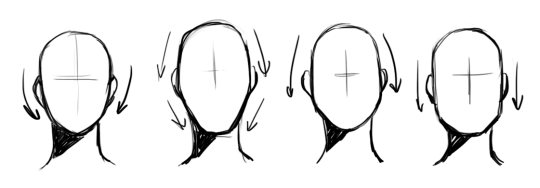
i think an important thing to learn, especially if you start out with drawing anime, is that faces don’t necessarily have to narrow from top to bottom
i like to think of wide top, wide middle, wide bottom, and rectangle-like as the 4 main face shapes
what you should keep in mind about them:
you’re only halfway done: the jawlines, the width-length ratio, the amount of fat in the cheeks, the intensity or subtlety of the face’s curves are all important components you still have to decide on after choosing the shape itself
none of these shapes are exclusively feminine or masculine, don’t hesitate drawing them on any gender
most people in real life have some variation of the wide middle type
if you are trying to draw real people, getting the shape of their face down is the first step
i’ve seen tutorials say the shape of the face can tell a lot of the character’s personality – you don’t necessarily have to live by that rule. as long as you aren’t unrealistically drastic about their proportions, their face shape determines their inner qualities as much as it would in real life (not at all)
replying is how you make friends! reply to anything you want and be friendly. don’t make rude jokes if you’re not friends already though!
quote retweeting is a no-no. when you “retweet with a comment” it’s not liked by content creators because it makes a new tweet out of their tweet and they don’t get the likes and retweets they would get if you’d just retweeted it straight up. if you want to comment on a retweet, reply to it or post a new tweet starting with “LRT” which stands for “last retweet” (it’s fine to quote retweet dumb memes and so on.)
you can make your tweets private. this means no one but your followers will be able to see what you post and no one will be able to retweet your content. you can switch back and forth between private and public at will. some people make a separate private account to tweet personal stuff and let mutuals follow it only. it’s a good way to keep things separate.
what is privatter? privatter is a third party web app that content creators can allow to be attached to their twitter. it lets them tweet content that they can make exclusive to logged in users, followers, mutuals, or a specific list of users. as long as you are logged in to twitter and fall into the intended category, you’ll be able to see it.
you can mute people you follow. (and those you don’t, ofc.) you can also mute words and phrases and entire conversations. if you mute someone you follow and they reply to you, that reply will still show up in your notifications. it’s a good way to keep the peace!
you can limit notifications to people who follow you or to mutuals. (notifications from people you follow will still show up regardless of which option you’ve selected.)
miscellaneous tips and warnings: if you accidentally unfollow and refollow someone, it won’t show up in their notifications as long as it’s within a couple minutes. no more accidental stuff. everyone can see who everyone follows so watch out. people will know if you unfollow. if you want to report someone and want them gone forever, report a tweet where they used a curse word. screenshotting tweets for harassment is a no-no and can get you banned. don’t be lame. don’t be a dick. vaguing others is generally really bad form and so is complaining about content within a fandom you’re in. use the mute tools at your disposal and don’t be a spoiler. you won’t come back from a rep like that and everyone sees everything.
that’s it! happy tweeting!!
how do i keep all my content together on twitter?
threads are your best friend!! you make a tweet with your commission info and links and so on and pin it to the top of your page. then reply to that tweet with a copy and pasted link to the tweet where you posted the art/fic/etc you want to not lose. reply to that new tweet with the next piece of artwork and so on. you can also make a unique hashtag for your content to use when you post, so that when you search that hashtag later you’re able to see just your art. good luck!
Was getting some of my images ready to be made into prints today so I thought I’d make a guide for anyone else interested in making prints of their work 😀
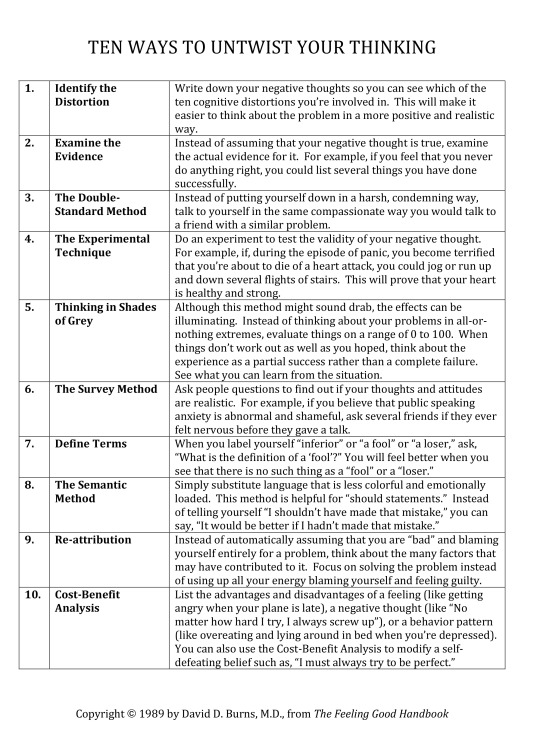
During my first month with my therapist, I was given this worksheet to read and work on. She noticed that while I was talking with her, that my thoughts followed a lot of these. I wasn’t aware that my anxiety had brought me down paths of low self-worth and stinky thinking.
After a couple of weeks of talking with her, she gave me this worksheet to work on.
While, at first, I thought these weren’t going to work out, I was very surprised to see just how easy they were to use . My homework at that time was to identify which sort of thinking I used on the regular and which ones would best challenge them for me.
So, what do you think? Do any of the maladaptive thinking patterns sound like you? which ways would you like to untwist your thinking?
The dos and don’ts of designing for accessibility are general guidelines, best design practices for making services accessible in government. Currently, there are six different posters in the series that cater to users from these areas: low vision, D/deaf and hard of hearing, dyslexia, motor disabilities, users on the autistic spectrum and users of screen readers.
[…] Another aim of the posters is that they’re meant to be general guidance as opposed to being overly prescriptive. Using bright contrast was advised for some (such as those with low vision) although some users on the autistic spectrum would prefer differently. Where advice seems contradictory, it’s always worth testing your designs with users to find the right balance, making compromises that best suit the users’ needs.
Just a quick walk through how I did this one. Unfortunately I can’t explain every single little decision because I am not always completely aware of why I do the things I do. Also.. this is one way of working, it’s NOT a “MUST FOLLOW EACH STEP”. I have a general way of thinking when I do my sketches and tend to adapt my work flow to my thoughts rather than try and follow a precise rule. What I mean by this is that, in my opinion, you should try to figure out how you see the world you want to draw/paint and figure out how it works and go from there. That’s what works for me. Might not work for everybody though.
For those of you that like everything neatly organised, here’s links to EVERY ONE of my first 150how to THINK when you draw TUTORIALS, in ALPHABETICAL ORDER for#SkillUpSunday!Enjoy, link, pin, share! Cheers!
If you have ever had to write a resume for work or for an application, then you know the hardest part is figuring out what type of words to use that sound professional and and intelligent.
Example: If an application asks you if you have any relevant experience for a job at a day care center and you have experience, like you have babysat children. You would look at the words in the columns to see what words you should use that will help your resume stand out. You might put down “Have supervised and attended to children on a regular basis.”
heres some information ive learned recently about various historical boob holders if you were interested.
these arent super specific to decades or anything like that and there’s lots of variation and stuff, so this isn’t the best reference for making a specific historically accurate costume/character design but its stuff i thought was interesting to know




 Lord Kib